Reviewed by Claire Bennett
Health Editor, HerVitalityGuide
Last Updated: August 2026
- Editorial Expertise: Women's Health, Menopause & Midlife Wellness, Nutritional Supplements, Evidence-Based Reviews
Editorial Disclaimer: This is an independent editorial analysis of FemiCore based on ingredient research and publicly available scientific literature. We have not run a clinical trial on this product. FemiCore is not intended to diagnose, treat, cure, or prevent any disease, and this article is not a substitute for a medical evaluation of urinary incontinence.
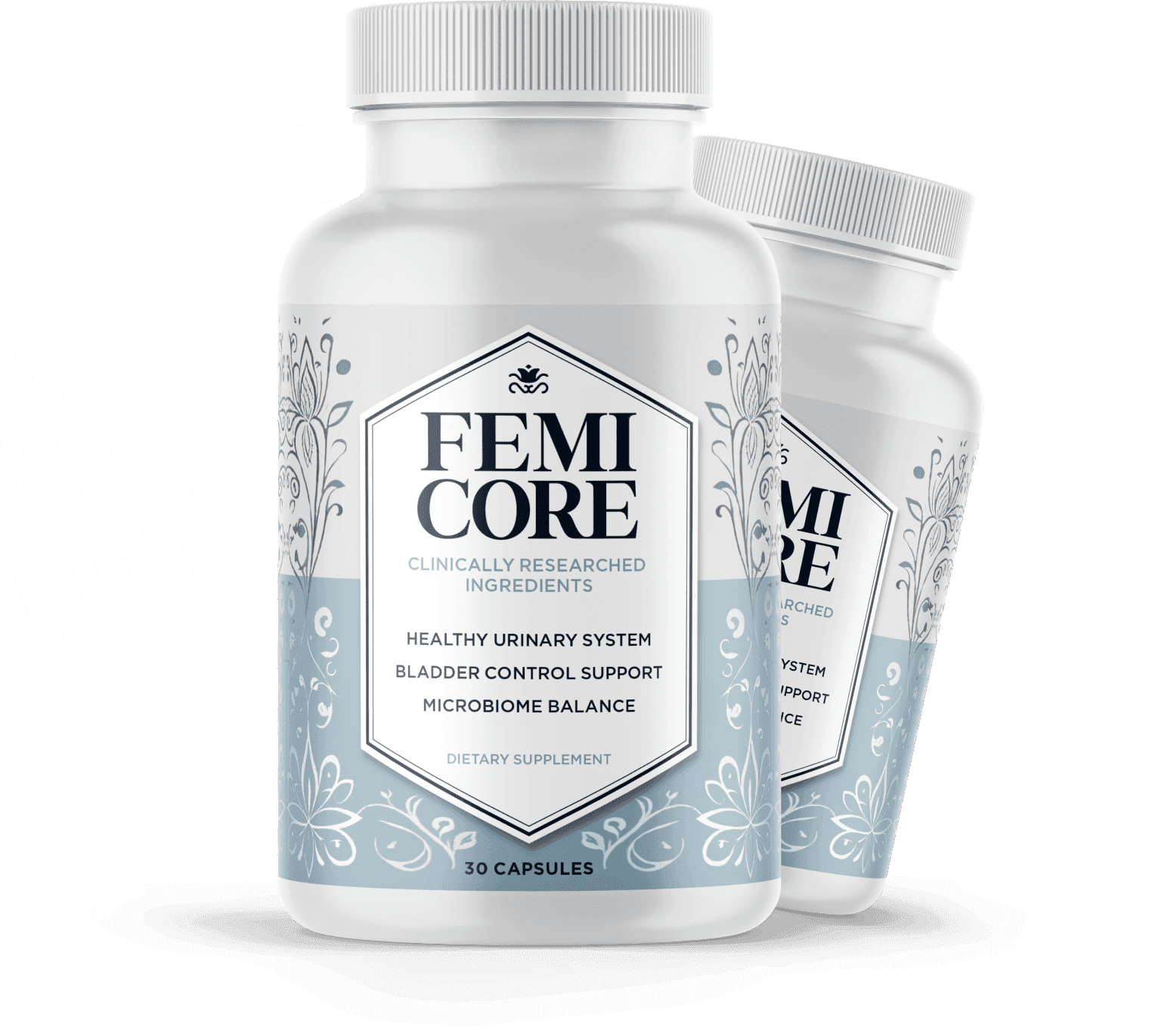
Bladder leaks and urgency are one of the most common things readers ask us about, and one of the least talked-about. So when a supplement like FemiCore shows up promising to fix it, it's worth doing the same thing we do for every product on this site: pulling the ingredient list, checking what's actually been studied, and reading the sales page with a skeptical eye. Here's what we found.
Quick verdict: FemiCore combines cranberry extract, bearberry, mimosa pudica, berberine, and probiotic strains. Cranberry has real (if modest) clinical support for bladder symptoms specifically, but the rest of the formula leans on traditional use more than modern trials, and the sales page uses countdown-timer urgency tactics that are worth knowing about before you buy.
What Is FemiCore?
FemiCore is a capsule supplement marketed to women dealing with bladder urgency, occasional leakage, and general urinary discomfort. It's built around supporting a healthy urinary microbiome rather than treating a specific diagnosed condition. It's positioned as everyday support, not a fix for a medical issue like stress incontinence after surgery or a diagnosed overactive bladder.
Product Summary
| Feature | Details |
|---|---|
| Product name | FemiCore |
| Format | Capsule, daily supplement |
| Key ingredients | Cranberry extract, bearberry (uva ursi), mimosa pudica, berberine, probiotic strains (incl. L. crispatus) |
| Refund policy | 60-day money-back guarantee |
| Where to buy | Official website only |
The Ingredients: What the Evidence Actually Says
- Cranberry extract: The strongest ingredient in the formula, and the one most relevant to what FemiCore claims to do. Cranberry's proanthocyanidins (PACs) are well studied for inhibiting bacterial adhesion to the bladder wall, and separate research has found dried cranberry improved symptoms in women with overactive bladder specifically, not just general urinary tract health. This is the one ingredient here backed by research on the actual symptom the product targets.
- Bearberry (uva ursi): Long used traditionally for urinary symptoms, but modern human data confirming it works the way traditional use suggests is thin. Worth knowing: uva ursi isn't recommended for long-term daily use in some clinical guidance due to liver-related caution at high doses.
- Mimosa pudica: Mostly known in gut-health contexts. We couldn't find human clinical research connecting it specifically to bladder or urinary symptoms. Its inclusion here reads more like a trendy addition than an evidence-based one.
- Berberine: Well studied for blood sugar and metabolic health, but not for urinary symptoms specifically. A legitimate compound in the wrong context.
- Probiotic strains (incl. L. crispatus): L. crispatus is genuinely relevant — it's associated with a healthy vaginal and urinary microbiome in research. The open question is whether an oral capsule reliably delivers live probiotics to where they'd need to colonize; research on oral probiotics reaching the urinary tract in meaningful numbers is still mixed.
Overall: cranberry is doing real, targeted work here, and the probiotic angle has a reasonable rationale even if the delivery mechanism is unproven. Bearberry, mimosa pudica, and berberine read more like formula padding than ingredients chosen because they're the best-evidenced options for this specific symptom.
A Marketing Tactic Worth Flagging
We'll say this plainly because it's the kind of thing worth knowing before you order: the official sales page is a video presentation with a countdown timer ("claim your discount before time runs out") and bundled "free bonus" ebooks stacked on top of the offer. That's a common structure in direct-response marketing — it doesn't automatically mean the product doesn't work, but the urgency is manufactured, not real scarcity. Take your time; there's no actual reason to decide in the next 30 minutes.
Pricing and Guarantee
FemiCore is sold directly through its official website with volume pricing options:
- 2 Bottles (60-day supply): $79 per bottle ($158 total)
- 3 Bottles (90-day supply): $69 per bottle ($207 total)
- 6 Bottles (180-day supply, best value): $49 per bottle ($294 total)
Every order is covered by a 60-day money-back guarantee. Treat the crossed-out "regular price" framing on the largest bundle as marketing math, not a real price comparison.
FemiCore
✓ Pros
- • Cranberry dose is backed by real research on overactive bladder symptoms specifically
- • Includes L. crispatus, a probiotic strain genuinely associated with urinary microbiome health
- • 60-day money-back guarantee
- • Clear refund process through the official site
✕ Cons
- • Sales page uses countdown-timer urgency tactics and stacked 'free bonus' offers
- • No public ingredient dosage breakdown outside the video presentation
- • Bearberry, mimosa pudica, and berberine lack direct research support for bladder symptoms
- • Whether oral probiotics reliably reach the urinary tract is still an open research question
- • Not a substitute for evaluating the underlying cause of incontinence with a doctor
The verdict
FemiCore's cranberry dose and probiotic strain choice have a real, if partial, evidence base for bladder symptoms specifically. The rest of the formula is more traditional-use than proven, and the sales page's urgency tactics are worth knowing about. If you're dealing with occasional leaks and want to try something low-risk before a doctor's visit, the 60-day guarantee limits the downside, but it's not a substitute for finding out why the leaks are happening in the first place.
Frequently Asked Questions
What are the main complaints about FemiCore?
We haven't tested FemiCore ourselves and we can't verify individual customer reviews, so this isn't a tally of user complaints. Based on the product page and the research, the concerns we'd flag are the countdown-timer urgency and stacked bonus offers, the lack of a public dosage breakdown outside the video presentation, and the thin evidence behind bearberry, mimosa pudica, and berberine for bladder symptoms.
Is FemiCore worth it in 2026?
It depends on what you expect. The cranberry and L. crispatus components have a real, if partial, evidence base, and the 60-day guarantee limits the financial downside. It's not a substitute for finding out why leaks are happening, and the rest of the formula is more traditional use than proven.
Is FemiCore a replacement for seeing a doctor?
No. Bladder leaks and urgency can have several underlying causes: weak pelvic floor muscles, nerve issues, or an overactive bladder. Figuring out which one you're dealing with usually gets better results than a supplement alone. If the leaks are new, worsening, or affecting daily life, a doctor or pelvic floor physical therapist is the better first step.
What's the best-evidenced ingredient in FemiCore?
Cranberry extract, specifically because it's been tested directly against overactive bladder symptoms and found to help, not just general urinary tract support.
Should I be concerned about the countdown timer on the sales page?
It's a common marketing tactic in direct-response sales pages and not unique to FemiCore. It doesn't reflect real stock scarcity — take the time you need to decide.
Is there a money-back guarantee?
Yes, 60 days from the official site, per the current product page.
Where can I buy FemiCore safely?
Only through the official website. Third-party sellers can't guarantee authenticity or honor the refund policy.