Reviewed by Claire Bennett
Health Editor, HerVitalityGuide
Last Updated: August 2026
- Editorial Expertise: Women's Health, Menopause & Midlife Wellness, Nutritional Supplements, Evidence-Based Reviews
Editorial Disclaimer: This is an independent editorial analysis of Neotonics based on ingredient research and publicly available scientific literature. We have not run a clinical trial on this product. Neotonics is not intended to diagnose, treat, cure, or prevent any disease, and this article is not a substitute for a dermatologist's evaluation of a specific skin concern.
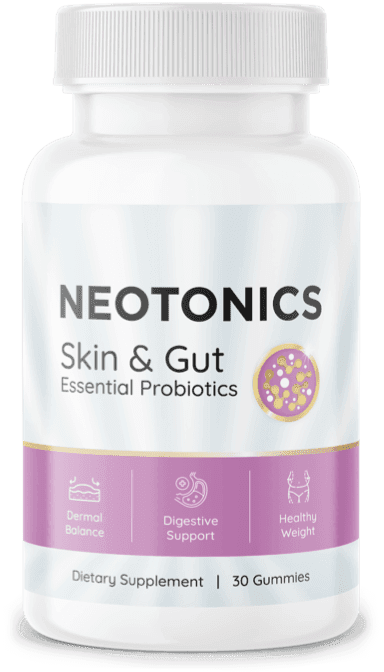
"Is Neotonics a scam?" is one of the most common searches tied to this product, right alongside "does it actually work." Fair questions for a probiotic gummy that claims to fix skin from the inside by way of your gut. We pulled the full ingredient list, checked the dosing that's actually disclosed, and read the sales page with a skeptical eye — here's what we found.
Quick verdict: Neotonics is not a scam in the fraud sense — it's a legitimately sold gummy with a disclosed probiotic count (500 million CFU of Bacillus coagulans) and a real, if oversimplified, "gut-skin axis" mechanism behind its marketing. The concerning gap: one of its nine ingredients, Babchi, carries a documented phototoxicity risk that isn't mentioned anywhere on the sales page. The rest of the formula is traditional-use botanicals with thin direct evidence for skin specifically.
What Is Neotonics?
Neotonics is a daily probiotic gummy built around the idea that skin cell turnover — the process of shedding and replacing skin cells — is influenced by the health of your gut microbiome. Instead of a topical treatment, it's an oral supplement combining a specific probiotic strain with eight additional botanical ingredients, positioned to support both digestion and skin appearance at the same time.
Product Summary
| Feature | Details |
|---|---|
| Product name | Neotonics |
| Format | Daily gummy, oral supplement |
| Key ingredients | Bacillus coagulans (500 million CFU), Babchi, inulin, dandelion, fenugreek, lemon balm, organic Ceylon ginger, slippery elm bark, organic lion's mane, fennel |
| Refund policy | 60-day money-back guarantee |
| Where to buy | Official website only |
Is Neotonics a Scam? The Short Answer
Based on our research, no — Neotonics is not a scam in the legal or fraud sense. It's sold through BuyGoods, an established retail platform with buyer protection and enforced vendor standards, the probiotic dose is disclosed on the label (500 million CFU, not hidden behind a vague "proprietary blend"), and it comes with a real 60-day refund window. What it is not, however, is a clinically proven treatment for aging skin — the marketing narrative ("gut controls skin cell turnover, therefore this gummy fixes your skin") is a real area of research, but it's presented with far more certainty than the underlying science actually supports.
The Ingredients: What the Evidence Actually Says
- Bacillus coagulans (500 million CFU): The headline ingredient, and the strongest one in the formula. There's genuine research connecting gut microbiome health to skin outcomes — the "gut-skin axis" is a real, active area of dermatological research, and spore-based probiotics like this one have shown antioxidant effects that may help preserve collagen. The important caveat: most of the positive skin studies tested this strain in combination with other probiotics and compounds (like guggul extract), not Bacillus coagulans on its own — so the research supports the category more than it proves this specific single-strain formula.
- Babchi (Psoralea corylifolia): This is the ingredient we'd flag hardest. Babchi is an Ayurvedic botanical sometimes marketed as a "natural retinol alternative," but that specific claim isn't well-supported by clinical evidence. More importantly, Babchi contains psoralen and related furocoumarin compounds with a documented phototoxicity risk — meaning they can increase skin sensitivity to UV light, potentially causing blistering or hyperpigmentation with sun exposure. This is a real, published safety consideration, and it isn't mentioned anywhere on the Neotonics sales page.
- Inulin & Dandelion: Inulin is a well-studied prebiotic fiber with real evidence for supporting gut bacteria and body composition. Dandelion has traditional diuretic use and some lab-level research on digestive enzyme effects, but human trials on skin appearance specifically are thin.
- Fenugreek: Most commonly studied for blood sugar and testosterone-related effects, not skin. Its inclusion here reads more like a general "wellness herb" addition than a targeted ingredient for this product's stated purpose.
- Lemon Balm, Organic Ceylon Ginger, Slippery Elm Bark, Organic Lion's Mane, Fennel: A mix of traditional-use botanicals. Ginger and lion's mane have real research behind them in other contexts (anti-inflammatory effects and nerve growth factor support, respectively), slippery elm has a genuine traditional history for soothing the digestive lining, but none of these five have direct clinical trials tying them to visible skin change.
Overall: Bacillus coagulans and inulin are doing legitimate, evidence-adjacent work here. The rest of the formula — especially Babchi — is where the gap between marketing confidence and actual research widens.
A Safety Detail Worth Knowing
Because Babchi's phototoxicity risk isn't disclosed on the official sales page, it's worth saying plainly: if you try Neotonics, don't assume it's automatically fine to combine with heavy sun exposure or tanning without checking with a doctor first, particularly if you have photosensitive skin or are already on medications that increase light sensitivity. This is a standard precaution with psoralen-containing botanicals, not a reason to panic, but it's exactly the kind of thing a sales page built to sell you a gummy has no incentive to mention.
Pricing and Guarantee
Neotonics is sold directly through its official website:
- 1 Bottle (30-day supply): $69
- 3 Bottles (90-day supply): $59/bottle, $177 total
- 6 Bottles (180-day supply, best value): $49/bottle, $294 total, plus free shipping and two bonus guides
Every order is covered by a 60-day money-back guarantee, and it's a one-time purchase with no subscription or recurring charges.
Neotonics
✓ Pros
- • Probiotic dose (500 million CFU Bacillus coagulans) is disclosed on the label, not hidden behind a proprietary blend
- • Bacillus coagulans and inulin have real, if indirect, research support for gut-skin axis health
- • Sold through BuyGoods with buyer protection and a genuine 60-day money-back guarantee
- • Not a scam in the fraud sense — legitimate vendor, real refund process
✕ Cons
- • Babchi carries a documented phototoxicity risk (increased UV sensitivity) that isn't disclosed anywhere on the sales page
- • Most positive probiotic-skin research tested combination formulas, not this single strain alone
- • Fenugreek, lemon balm, and fennel lack direct evidence for skin appearance specifically
- • No clinical trial on the finished Neotonics formula itself
- • Marketing narrative overstates how settled the 'gut controls your skin' science actually is
The verdict
Neotonics isn't a scam — it's a legitimately sold gummy with a disclosed probiotic dose and a real research area (the gut-skin axis) behind its core pitch. But the marketing is more confident than the science: most of the supporting research is on probiotics in combination, not this exact single-strain formula, and the sales page never mentions Babchi's known phototoxicity risk. If you want to try it, the 60-day guarantee limits the downside — just go in without expecting a clinically proven skin transformation, and be mindful of sun exposure.
Frequently Asked Questions
Is Neotonics a scam?
No, not in the fraud sense. It's sold through a legitimate retail platform (BuyGoods) with a disclosed ingredient list, a disclosed probiotic dose, and a real 60-day refund policy. The fairer criticism is that its marketing overstates how proven the "gut controls skin" science is for this specific formula, not that it's fraudulent.
What's the best-evidenced ingredient in Neotonics?
Bacillus coagulans, specifically because the gut-skin axis is a genuine, active area of dermatological research and this strain has documented antioxidant effects relevant to collagen preservation — though most of the strongest research tested it in combination with other compounds, not alone.
Should I be concerned about the Babchi ingredient?
It's worth knowing about, not panicking over. Babchi contains psoralen compounds with a documented phototoxicity risk — increased skin sensitivity to UV light. If you have photosensitive skin, are on medications that increase light sensitivity, or spend a lot of time in the sun, it's worth mentioning to a doctor before starting.
How long before I'd notice a difference?
The company doesn't publish a specific clinical timeline, and there's no trial on the finished formula to point to. Skin cell turnover itself is a multi-week biological process regardless of any product, so treat any "fast results" framing on the sales page skeptically.
Is there a money-back guarantee?
Yes, 60 days from the official site, per the current product page.
Where can I buy Neotonics safely?
Only through the official website. Given how many copycat and third-party listings show up in search results for supplements like this, sticking to a link from a source you trust is the safest way to make sure you're covered by the real refund policy.