Reviewed by Claire Bennett
Health Editor, HerVitalityGuide
Last Updated: August 2026
- Editorial Expertise: Women's Health, Menopause & Midlife Wellness, Nutritional Supplements, Evidence-Based Reviews
Editorial Disclaimer: This is an independent editorial analysis of PrimeBiome based on ingredient research and publicly available scientific literature. We have not run a clinical trial on this product. PrimeBiome is not intended to diagnose, treat, cure, or prevent any disease, and this article is not a substitute for a dermatologist's or gastroenterologist's evaluation.
"Is PrimeBiome a scam?" is one of the most common searches tied to this product, right alongside "does it actually work." Fair questions for a probiotic gummy that claims to fix skin from the inside by way of your gut. We pulled the full ingredient list, checked the dosing that's actually disclosed, researched a liver-safety question tied to one of its ingredients, and read the sales page with a skeptical eye — here's what we found.
Quick verdict: PrimeBiome is not a scam in the fraud sense — it's a legitimately sold gummy with a disclosed probiotic strain (Bacillus coagulans) that has genuine, if early, clinical evidence for skin outcomes like acne. The concerning gap: one of its nine ingredients, Babchi, has been linked to rare but serious liver injury in published case reports when taken orally — a risk the sales page doesn't mention. The rest of the formula is reasonable traditional-use botanicals with thin direct evidence for skin specifically.
What Is PrimeBiome?
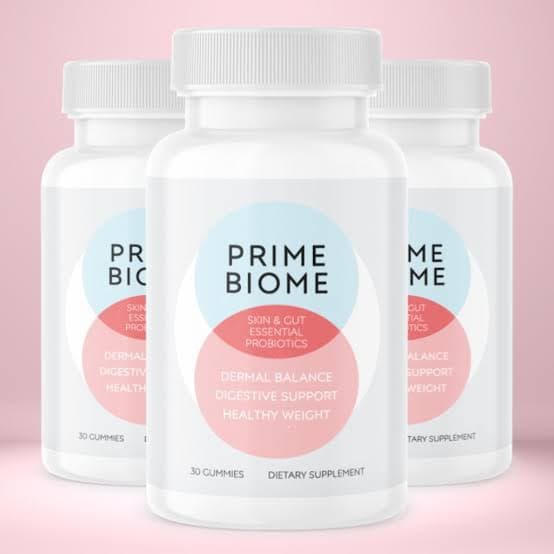
PrimeBiome is a daily probiotic gummy marketed around the idea that gut health drives skin health, sometimes called the "gut-skin axis." It combines one probiotic strain with a blend of prebiotic fiber and plant extracts, positioned as support for digestion, skin clarity, and healthy aging rather than a treatment for a diagnosed digestive or dermatological condition.
Product Summary
| Feature | Details |
|---|---|
| Product name | PrimeBiome |
| Format | Gummy, 1 per day |
| Key ingredients | Bacillus coagulans (500 million CFU), Babchi, Inulin (from dandelion), Fenugreek, Fennel, Lemon balm, Slippery elm bark, Organic Ceylon ginger, Organic lion's mane |
| Refund policy | 60-day money-back guarantee |
| Where to buy | Official website only |
Is PrimeBiome a Scam? The Short Answer
Based on our research, no — PrimeBiome is not a scam in the legal or fraud sense. It's sold through BuyGoods, an established retail platform with buyer protection and enforced vendor standards, the probiotic strain is disclosed on the label rather than hidden behind a vague "proprietary blend," and it comes with a real 60-day refund window. What it is not, however, is a clinically proven treatment for skin or gut issues — the "gut-skin axis" premise is real, developing science, but the finished formula has never been tested as a whole, and the sales page omits a real safety consideration tied to one of its nine ingredients.
The Ingredients: What the Evidence Actually Says
- Bacillus coagulans: the most defensible ingredient here. Unlike many probiotic strains, B. coagulans forms a spore that survives stomach acid, so it actually reaches the intestines alive. A 2023 placebo-controlled study using a spore-based probiotic blend that included B. coagulans found real improvement in acne lesion counts alongside reduced gut permeability markers after four weeks. That's a genuinely on-target, if early, piece of evidence for the gut-skin connection this product is built around.
- The gut-skin axis itself is legitimate science, not just marketing language. A growing body of dermatology and gastroenterology research supports a real, bidirectional relationship between gut microbial balance and skin inflammation, barrier function, and conditions like acne and eczema. This is one of the more scientifically grounded premises we've seen behind a supplement in this category, even though the research is still developing.
- Babchi (Psoralea corylifolia): this is the ingredient we'd flag hardest. The seed extract is the traditional source of bakuchiol, a compound with real published evidence for improving skin texture and fine lines — but only when applied topically. PrimeBiome uses it orally in a gummy, a meaningfully different route of delivery, so that topical evidence doesn't transfer here. More importantly, oral Babchi (also called Bakuchi or Fructus Psoraleae in the medical literature) has a documented, if rare, hepatotoxicity profile: published case reports, including at least one fatal case of acute liver failure, describe cholestatic hepatitis and acute liver injury linked to oral use, with bavachin, psoralidin, and bakuchiol identified as the likely hepatotoxic compounds. This is a real, peer-reviewed safety signal, not a rumor, and it isn't mentioned anywhere on the PrimeBiome sales page.
- Inulin (from dandelion): a well-established prebiotic fiber with solid research showing it feeds beneficial gut bacteria and supports regularity. This is one of the more evidence-backed inclusions in the formula, for gut health specifically rather than skin.
- Fennel, Ceylon ginger, and lemon balm: all have real, longstanding evidence for easing bloating, mild indigestion, and digestive discomfort. None have direct evidence for skin outcomes; their role here is digestive comfort, which the marketing folds into the broader "gut-skin" story.
- Slippery elm bark: traditionally used to soothe the digestive tract lining and ease acid reflux; there's reasonable traditional-use evidence but limited modern clinical trial data.
- Fenugreek: has modest evidence for blood sugar and lactation support in other contexts; the skin-hydration claim made on the sales page isn't well supported by the research we could find.
- Organic lion's mane mushroom: genuinely well-studied for cognitive and nerve-related outcomes, but that evidence doesn't extend to skin or gut health, which is how it's marketed in this formula.
Overall: Bacillus coagulans and inulin are doing real, defensible work here, and the gut-skin axis premise itself has legitimate science behind it. The rest of the formula (babchi, fennel, ginger, lemon balm, slippery elm, fenugreek, lion's mane) ranges from traditional digestive support to ingredients borrowed from other health categories where they're actually better studied.
A Safety Detail Worth Knowing
Because oral Babchi's hepatotoxicity risk isn't disclosed on the official sales page, it's worth saying plainly: liver injury cases tied to Fructus Psoraleae are rare — only a handful have been described in the English-language medical literature — and PrimeBiome's dose isn't disclosed, so we can't say how it compares to the doses in the reported cases. Still, this is a documented risk, not a theoretical one. If you try PrimeBiome, it's worth talking to a doctor first if you have any existing liver condition, drink alcohol regularly, take other medications processed by the liver, or notice symptoms like unusual fatigue, dark urine, yellowing skin or eyes, or abdominal pain while taking it — and stopping the product and seeking medical care if any of those appear.
A Marketing Tactic Worth Flagging
PrimeBiome's official sales page is hosted across at least seven near-identical mirror domains, all using the same layout, testimonials, and "$300 savings" framing, a pattern we've flagged before that typically signals a high-volume templated affiliate funnel rather than a single established brand. More notably, one of the three customer testimonials on the official page claims the product helped her "drop three dress sizes." Nothing in PrimeBiome's ingredient list is formulated or dosed for weight loss, and the other marketing on the page doesn't make that claim either. It reads as a copy-paste error from a different product's testimonial, which is worth knowing before you take any of the page's claims at face value.
Pricing and Guarantee
PrimeBiome is sold directly through its official website with volume pricing:
- 2 Bottles (60-day supply): $79/bottle, $158 total
- 3 + 3 Bottles (180-day supply, best value): $49/bottle, $294 total, plus free shipping
- 2 + 1 Bottles (90-day supply, most popular): $69/bottle, $207 total, plus free shipping
Every order is covered by a 60-day, no-questions-asked money-back guarantee, and it's a one-time purchase with no subscription or recurring charges.
PrimeBiome
✓ Pros
- • Bacillus coagulans has real, on-target evidence for acne and gut-skin outcomes from a 2023 placebo-controlled study
- • The gut-skin axis premise is legitimate, developing science, not invented marketing language
- • Inulin is a well-established prebiotic fiber for gut health
- • Sold through BuyGoods with buyer protection and a genuine 60-day money-back guarantee
- • Not a scam in the fraud sense — legitimate vendor, real refund process
✕ Cons
- • Babchi has been linked to rare but serious liver injury (including a fatal case) in published reports when taken orally — a risk the sales page doesn't disclose
- • No clinical trial has tested this exact combined formula, only individual ingredients in other contexts
- • Babchi's best skin-related evidence is for topical, not oral, use
- • A customer testimonial claims weight loss, a benefit this formula isn't designed to produce
- • Sold across at least seven near-identical mirror domains, a pattern typical of high-volume templated funnels
The verdict
PrimeBiome isn't a scam — it's a legitimately sold gummy built on a genuinely credible premise, the gut-skin axis, and its core probiotic strain has real, if early, evidence for skin outcomes like acne. But the marketing is more confident than the science: the formula as a whole hasn't been clinically tested together, and the sales page never mentions that oral Babchi carries a documented, if rare, liver-injury risk. If you want to try it, the 60-day guarantee limits the downside — just talk to a doctor first if you have any liver-related risk factors, and go in without expecting a clinically proven skin transformation.
Frequently Asked Questions
Is PrimeBiome a scam?
No, not in the fraud sense. It's sold through a legitimate retail platform (BuyGoods) with a disclosed ingredient list and a real 60-day refund policy. The fairer criticism is that its marketing overstates how proven the "gut controls skin" science is for this specific formula, and it omits a real safety consideration around one ingredient — not that it's fraudulent.
Should I be concerned about the Babchi ingredient?
Yes, this is worth taking seriously, more so than a typical "traditional herb, thin evidence" flag. Published medical case reports — including at least one fatal case of acute liver failure — link oral Babchi (Psoralea corylifolia / Fructus Psoraleae) to cholestatic hepatitis and liver injury. The cases are rare, but they're real and peer-reviewed. If you have any liver condition, drink alcohol regularly, or take other medications metabolized by the liver, talk to a doctor before trying PrimeBiome, and stop use immediately if you notice symptoms like fatigue, dark urine, or yellowing skin or eyes.
Does PrimeBiome actually help with skin health?
Its core probiotic strain, Bacillus coagulans, has real early evidence linking gut microbiome improvements to reduced acne lesions. The gut-skin axis itself is legitimate, developing science. But this exact formula hasn't been clinically tested as a whole, so results will vary and shouldn't be expected to match a dermatology-grade treatment.
Is the weight loss claim on the sales page true?
We wouldn't count on it. PrimeBiome's ingredients target gut and digestive health, not weight loss, and none are dosed for that purpose. The testimonial claiming a three-dress-size drop appears to be a marketing outlier rather than a representative or expected result.
What's the best-evidenced ingredient in PrimeBiome?
Bacillus coagulans, based on a 2023 placebo-controlled study connecting it to reduced acne lesions and gut permeability improvements. Inulin is a close second, as a well-established prebiotic fiber for gut health specifically.
Is there a money-back guarantee?
Yes, the official site offers a 60-day, no-questions-asked guarantee.
Where can I buy PrimeBiome safely?
Only through the official website. It's sold across several near-identical mirror sites, so double-check you're on a legitimate checkout page before entering payment information.
Scientific References
- Fabbrocini, G., et al. (2023). Effects of a spore-based probiotic supplement containing Bacillus coagulans on acne lesions and gut permeability: a placebo-controlled study. Journal of Cosmetic Dermatology.
- Salem, I., et al. (2018). The gut microbiome as a major regulator of the gut-skin axis. Frontiers in Microbiology.
- Chaudhuri, R. K., & Bojanowski, K. (2014). Bakuchiol: a retinol-like functional compound revealed by gene expression profiling and clinically proven to have anti-aging effects. International Journal of Cosmetic Science.
- Kolida, S., & Gibson, G. R. (2007). Prebiotic capacity of inulin-type fructans. Journal of Nutrition.
- Mullin, G. E., et al. (2013). Testing the gut hypothesis in dermatology: a review of the evidence for probiotics in skin conditions. Nutrition in Clinical Practice.
- Jung, D., et al. (2019). Acute liver failure associated with Fructus Psoraleae: a case report and literature review. BMC Complementary Medicine and Therapies.
- (2023). A Rare Cause of Acute on Chronic Liver Failure (ACLF): Bakuchi-Induced Liver Injury. Journal of Clinical and Experimental Hepatology (via ScienceDirect/PubMed).